


Small Pitch LED Display for Church
CPS Series — 640×480mm · P1.25–P3.07 Fine Pitch · 800 nits · Front Service
A 640×480mm small pitch LED display for rooms where the first row sits close and the detail matters: lyrics with no visible grain, sermon points small text can carry, and an IMAG feed that stays flicker-free. Die-cast aluminum cabinets at 65mm mount tight to the wall, every component services from the front, and the dual-engine power design is built so a failed supply never ends a service.
- P1.25–P3.07 fine pitch range — crisp text from about 1.3 meters, for chapels and close-seating sanctuaries
- 800 nits brightness + 3840Hz refresh — readable under stage light, clean on livestream cameras
- Magnetic full front service — modules, power and receiver cards extract from the front, no rear corridor
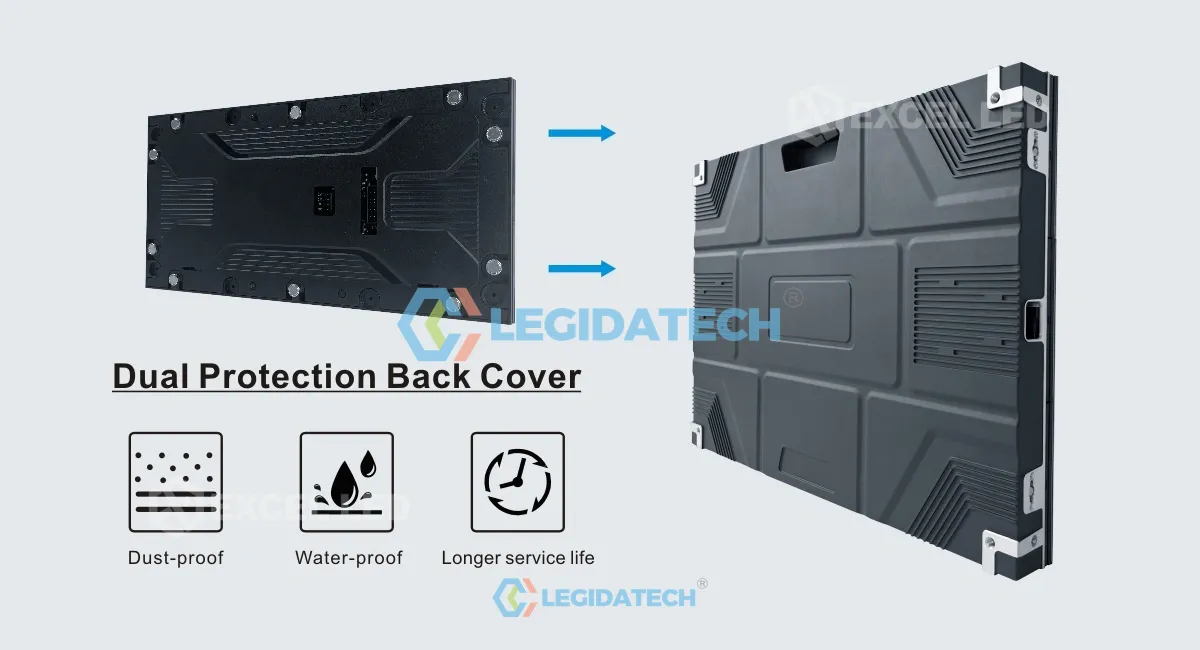
- Dual-engine power + dual protection back cover — redundancy and dust sealing where it counts
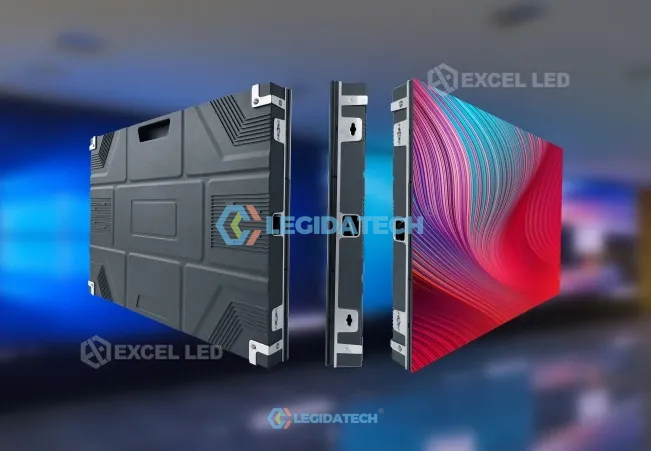
CPS Series 640×480mm small pitch cabinets — multi-angle product view
Quick Answers Before You Scroll
What is a small pitch LED display? An LED wall with pixel pitches below about P3 — on this page, P1.25 to P3.07 — where the gaps between LEDs are small enough that text and faces read cleanly from a few feet away. It is the right tool when people sit or stand close to the screen.
Which rooms is the CPS Series built for? Chapels, small sanctuaries, prayer rooms and lobbies where the closest viewer is 1.3–3 meters away; streaming and broadcast backdrops where the camera sees detail; and any room where stage lighting makes an 800-nit wall the safer choice.
How is it maintained? Full front service on magnetic modules — modules, power supplies and receiving cards all come out from the front with a suction tool. No rear access corridor, no dismantling the wall.
Will it work with our content setup? Yes — the wall runs through a standard LED control system fed from your presentation machine (ProPresenter, Resi or any HDMI source). The system works with mainstream control platforms including NovaStar, Colorlight and Huidu; the exact configuration is specified in your quotation.
What does it cost? Fine pitch is priced per project — pitch, area and control system drive the number. We quote against your exact room; for a reference band, complete P2.5 church packages are published from $2,245 to $5,100 EXW on our indoor fixed church LED screens page.
A Fine-Pitch Church LED Wall With Close-Viewing Detail
The CPS Series is a small pitch indoor LED display platform built on 640×480mm die-cast aluminum cabinets, 65mm deep, each carrying six 320×160mm modules in a 2×3 layout. Six pitch options — from P1.25 to P3.07 — share the same cabinet, so the wall’s resolution is a choice you make per room, not a different product.
Where it fits in the church range: the Ehonor Series is the proven all-round fixed screen, the PS Series is the ultra-slim wall-hugger, and the CPS Series is the fine-pitch specialist — the one you pick when viewers get close, text gets small, or cameras get near. The platform is part of the LEGIDATECH Official Website indoor display family, and a GOB-coated variant (CPS Pro) adds an anti-collision surface for high-traffic rooms.
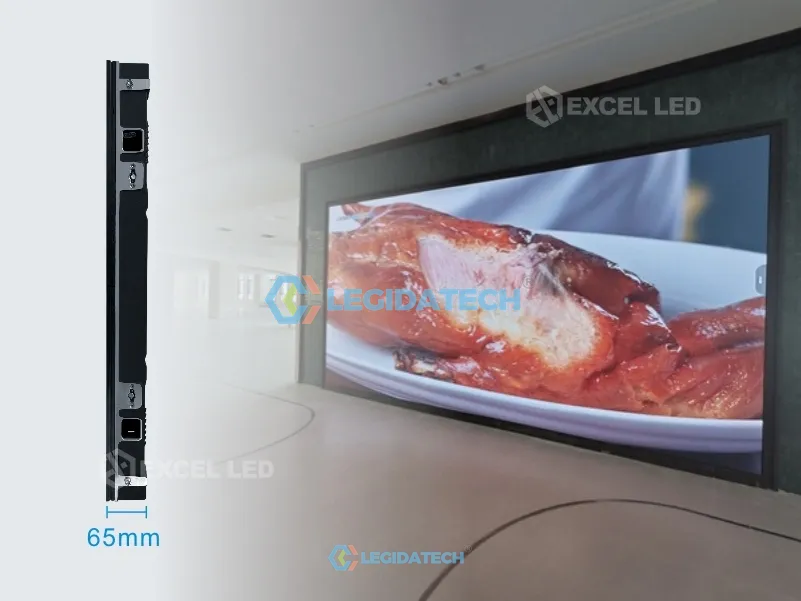
640×480mm die-cast cabinet with 320×160mm modules — one cabinet, six modules, any pitch
The Church Problem Fine Pitch Solves: The First Row
Every LED wall has a distance inside which the eye starts resolving individual pixels — and in churches that distance is not theoretical. The front three rows see the screen from two to four meters. On a coarse-pitch wall, lyrics look grainy to exactly the people singing them, and the IMAG close-ups look like mosaic. That is the problem a small pitch display exists to solve.
Lyrics without visible grain
At P1.25–P1.86, the wall reads as solid text from roughly 1.3–2 meters — chapel and prayer-room distance, and front-pew distance for small sanctuaries.
800 nits against stage wash
Interior lighting and moderate stage wash stop being a readability risk. For direct, high-output wash onto the wall face, tell us — we will model it honestly before you buy.
3840Hz refresh for IMAG
The refresh rate keeps the wall flicker-free at normal shutter speeds — your livestream and archive recordings stay clean, and close-up IMAG shots do not band.
16:9 wall arrays
Four cabinets wide by three high builds a true 16:9 wall (2560×1440mm at any pitch) — widescreen lyrics, IMAG and video render without cropping or stretching.
Magnetic Front Service on a Die-Cast Aluminum Cabinet
The CPS cabinet is pressure-cast aluminum with CNC-machined faces — rigid enough that a 640×480mm section stays flat without a rear frame, and machined so that modules locate with positioning pins, beads and quick locks on the X, Y and Z axes. Assembly precision is why seams between cabinets disappear at two meters — the distance your front rows sit at.
Because the modules mount magnetically, the whole service chain runs from the front:
- Modules pull forward with a suction tool — pins realign the replacement automatically.
- Power supplies are front-extractable; the dual-engine design means the backup supply carries the cabinet while the failed one is swapped.
- Receiving cards and cabling sit behind the modules, reachable once two modules are off — no cabinet removal, no wall scaffolding.
Cabinets mount first and modules go in after, so the install itself never risks pressing on live module faces — a small sequencing detail that protects your display from day one.
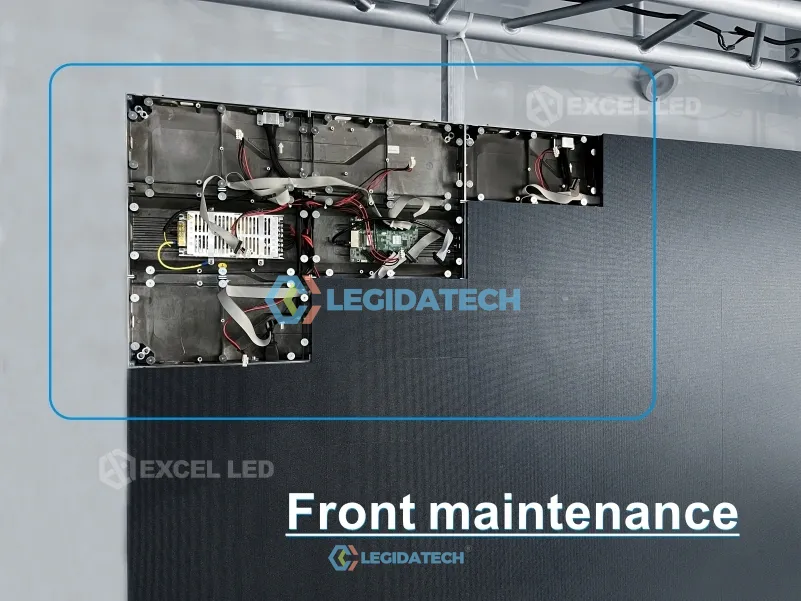
Full front maintenance — service happens in front of the wall, not behind it
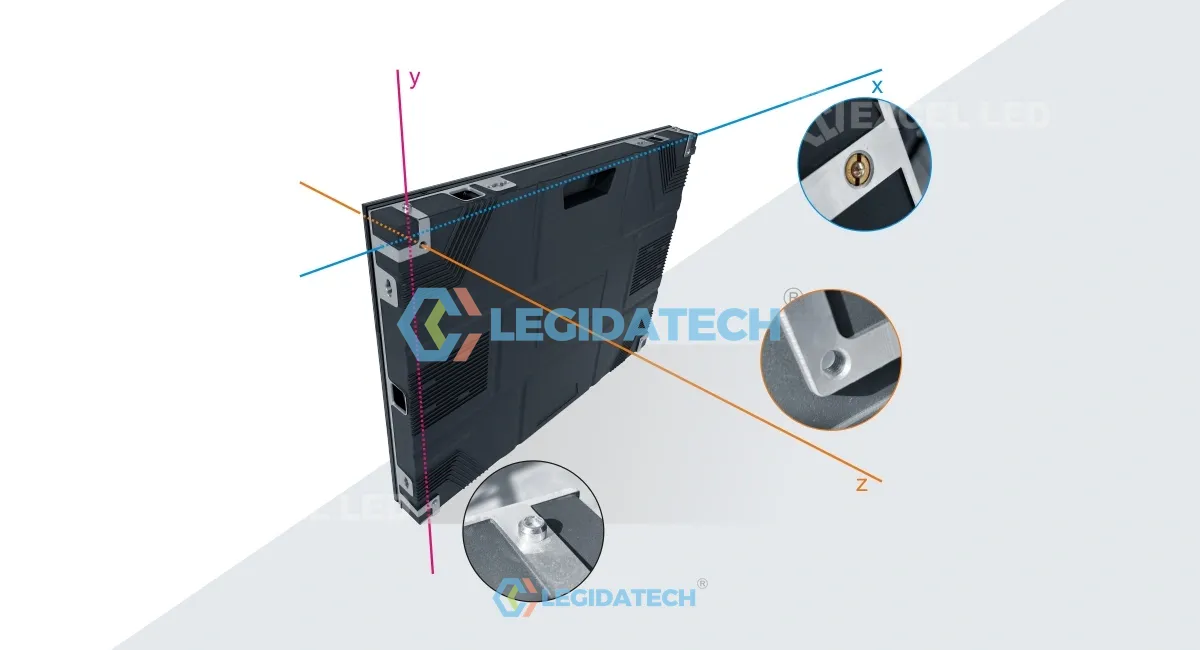
X/Y/Z positioning pins, beads and quick locks — the precision that makes seams disappear at two meters
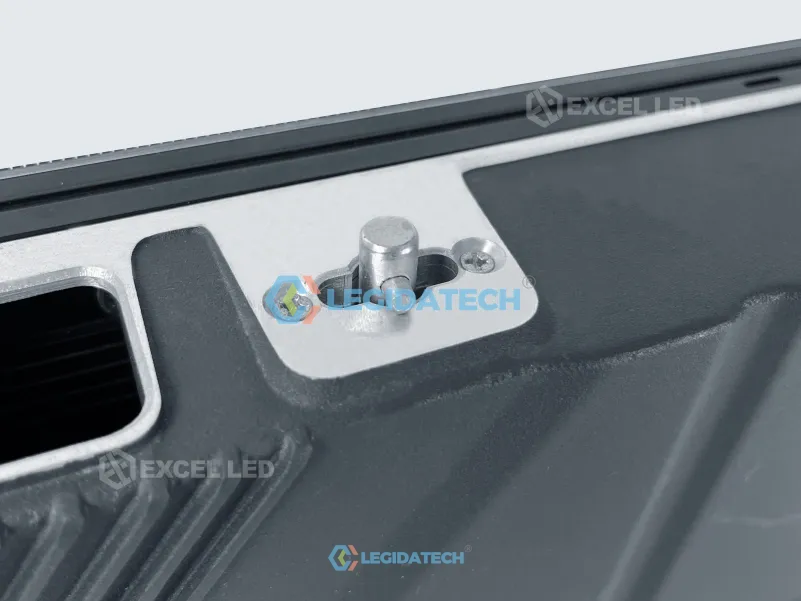
Quick-lock hardware detail — tool-free alignment for cabinets and modules
Why this matters for your board’s decision: front service turns most post-warranty repairs into in-house, minutes-long tasks with parts from your spares kit — instead of technician visits and wall dismantling. Ask for a live video demonstration of a module swap before you commit — request it with your quote.
800 Nits and 3840Hz: Readable Under Stage Light, Flicker-Free on Camera
Two numbers decide whether a church LED wall looks professional on a Sunday: brightness against your room’s light, and refresh rate against your camera’s shutter.
800 nits covers sanctuary and chapel lighting with margin — including the moderate stage wash that washes out lesser walls. It is calibrated for interior conditions: direct sunlight is a different product category (see our OK Series outdoor screens).
3840Hz refresh keeps the display free of rolling bands and flicker at normal camera shutter speeds. If your church streams, records, or puts close-up IMAG on the wall — and most now do — this is the spec to hold firm on, and it is standard across the CPS range.
Supporting cast: 65,536 gray levels per color for smooth fades during worship sets, a 5000:1-class contrast with an anti-glare module face, and 140-degree horizontal and vertical viewing angles so side seating reads the wall without color shift.
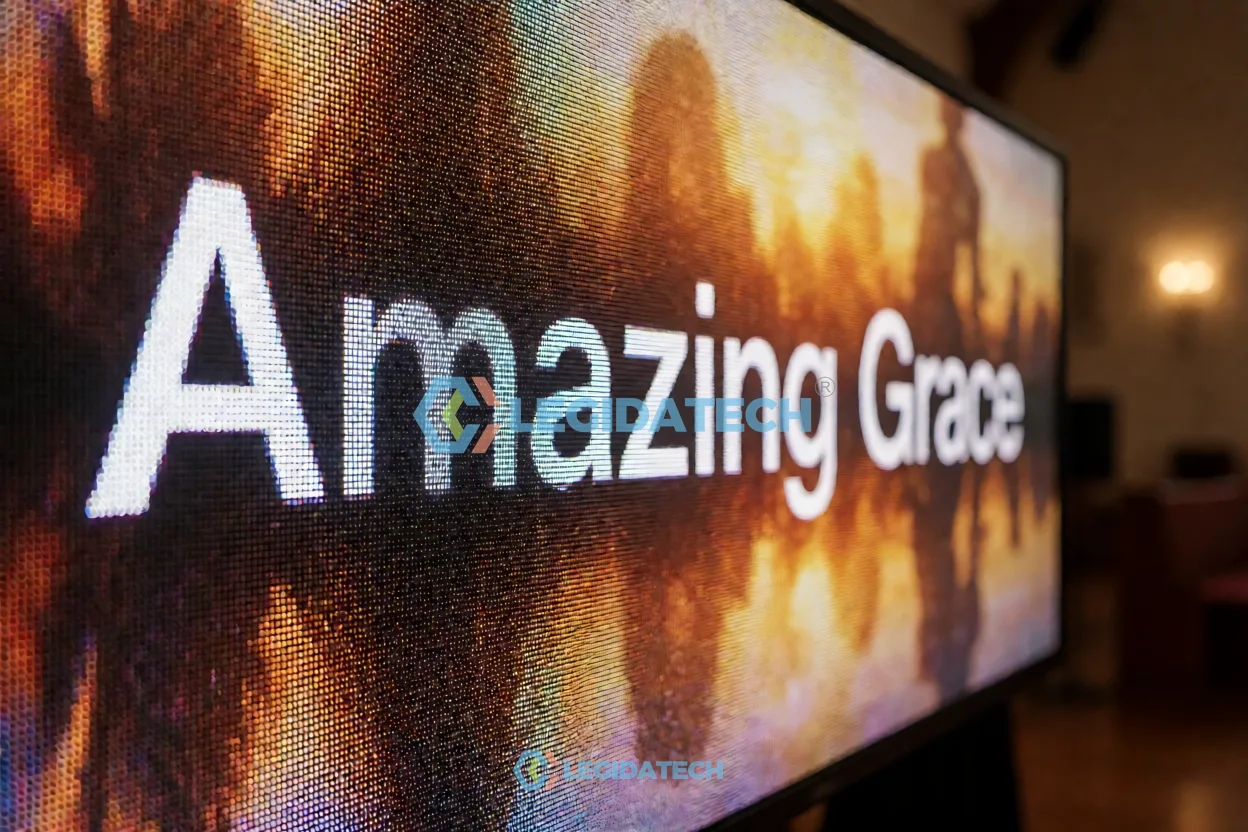
Rendered close-up — fine pitch holds text and faces where the first row can judge it
For your tech director’s checklist: confirm the 3840Hz configuration in writing on the quotation (the manufacturer sheet lists 3840/1920Hz across configurations — we specify the 3840Hz build for camera-critical rooms), and do one shutter-speed test at rehearsal.
Standard 16:9 Wall Arrays: No Stretched Lyrics, No Cropped IMAG
The 640×480mm cabinet assembles into a true 16:9 screen in a 4×3 cabinet array — 2560×1440mm, at any pitch in the range. That single geometry fact quietly removes a class of Sunday-morning problems: widescreen lyric backgrounds that fit without side bars, IMAG that keeps its proportions, and video content that plays as produced.
It also standardizes your content workflow. Volunteers build lyric backgrounds at 1920×1080 or 3840×2160 and the wall maps them one-to-one — no per-service scaling decisions, no “why is the logo stretched” moments. Rooms that need a different shape (a wide stage strip, a tall column screen) simply build other cabinet arrays; the 16:9 option is there when you want it.
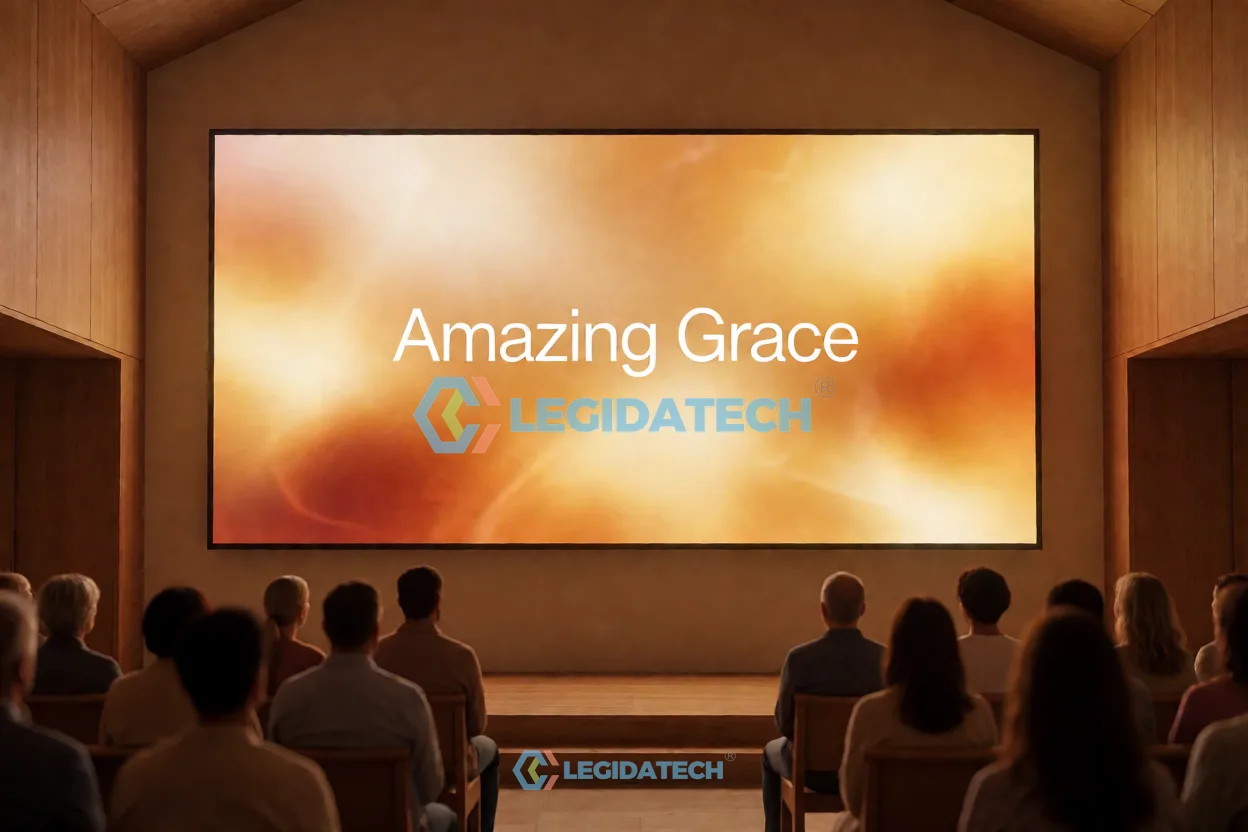
Rendered scene — 4×3 cabinet array = 2560×1440mm true 16:9, content renders as produced
Dual-Engine Power and a Dual Protection Back Cover
Two failure-avoidance systems are built into the CPS cabinet:
- Dual-engine power design — two power supplies per cabinet run in parallel; when the primary fails, the backup takes over automatically and the wall keeps playing. Given that power supplies are statistically the first component to fail in any LED wall, this is the difference between a logged fault and a dead screen mid-service.
- Dual protection back cover — a sealed cabinet back plus individual module back covers, a two-layer defense against dust and moisture. It protects the components that humid storage rooms, unheated weekday halls and dusty construction-adjacent spaces threaten most.
Power draw stays predictable for your electrician: 800 W/m² maximum, about 300 W/m² average in normal content. A 10m² chapel wall therefore plans around 8 kW peak capacity on the supply side — a dedicated circuit and a labeled breaker, specified in the install plan we ship with the wall.
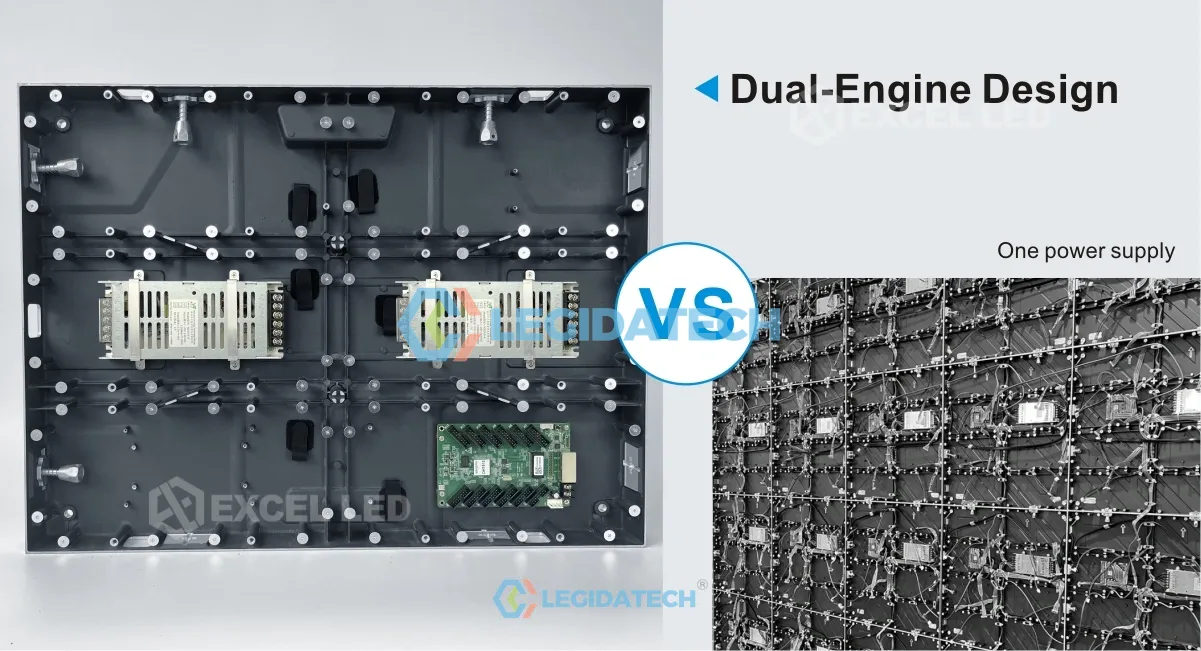
Dual-engine power and dual protection back cover — redundancy where LED walls actually fail
The GOB Option (CPS Pro): Anti-Collision Face for High-Traffic Rooms
Fine pitch means more LED surface exposed per square meter — which makes surface protection worth more, not less. The CPS Pro configuration bonds a GOB (Glue-on-Board) transparent layer over every module face:
- Impact resistance — mic stands, cleaning equipment, and youth-hall projectiles stop being module-killers.
- Dust and moisture sealing — the LED matrix is protected end-to-end, on top of the cabinet’s dual protection back cover.
- Longer visual life — protected lamp beads keep their color and brightness longer in demanding rooms.
If the wall lives in a youth room, a multipurpose hall, or anywhere at hand height, price the GOB surface in the original order — it costs far less than replacing modules later.
GOB-coated module face (CPS Pro configuration) — the anti-collision surface for busy rooms
Where Churches Use the CPS Small Pitch Display
Small sanctuaries and chapels with close seating
The defining CPS job. When the front row is 2–4 meters from the wall, P1.25–P1.86 keeps lyrics, scripture and sermon points crisp for everyone — including the people closest, who on a coarse wall see the screen at its worst.
Lobby and welcome wall
Welcomes, announcements, sermon series art and event promotion at lobby distance — the 800-nit brightness carries the wall through glass-door daylight and mixed lobby lighting.
Streaming and broadcast backdrop
For churches producing online services, the wall is both set and tool: 3840Hz refresh records clean, fine pitch survives the close framing a streaming camera uses, and the 16:9 array maps one-to-one to the broadcast canvas. See our stage LED backdrop screen sizes if the backdrop is the primary use.
Youth room and multipurpose hall
Gaming, movie nights, teaching — and the knocks that come with them. Specify the GOB (CPS Pro) surface and the wall shrugs off the life of a youth building. For a wider content and operation view, our LED display characteristics guide covers what to expect over years of use.
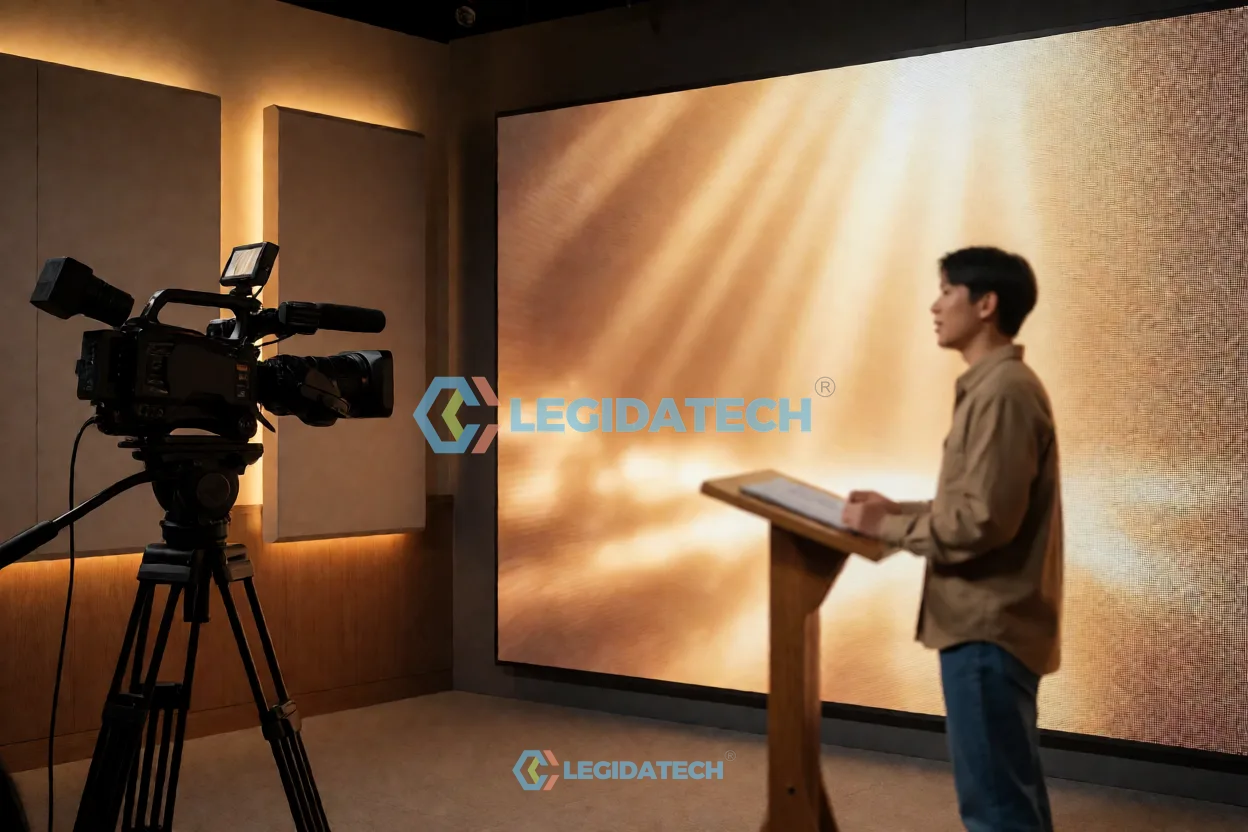
Rendered scene — streaming backdrop duty; fine pitch and 3840Hz built for the camera
Documented Church Projects Across 12 Countries
LEGIDATECH’s project archive documents 44 church installations across 12 countries, from P2.5 sanctuary walls in Nigeria and the UK to chapel-scale displays elsewhere — the same indoor fixed platform family the CPS Series belongs to. Our team matches every inquiry with the documented reference closest to your room size, pitch and budget, so you can see a real wall before you sign.
Start with the walls: a P2.5 indoor church LED screen in Nigeria, an installed church LED display in South Africa, and the full church LED screen case video library.
Want a reference that matches your room? Request a phone call and we will connect you with a church of similar size and region that runs a documented installation.
CPS Series Specifications: 640×480mm Small Pitch LED Display
Six pitch options share one cabinet. Pitch values below are computed from the manufacturer’s own module resolutions (320×160mm modules); the manufacturer sheet labels the range nominally P1.2–P3.
| Parameter | CPS1.25 | CPS1.53 | CPS1.86 | CPS2 | CPS2.5 | CPS3.07 |
|---|---|---|---|---|---|---|
| Pixel Pitch | 1.25 mm (computed) | 1.538 mm (computed) | 1.86 mm (computed) | 2 mm (computed) | 2.5 mm (computed) | 3.077 mm (computed) |
| Module Size | 320×160 mm (confirmed) | |||||
| Module Resolution | 256×128 | 208×104 | 172×86 | 160×80 | 128×64 | 104×52 |
| Cabinet Size | 640×480 mm, 65 mm deep, die-cast aluminum (confirmed) | |||||
| Cabinet Layout | 2 wide × 3 high = 6 modules per cabinet; 4×3 cabinets build a 2560×1440mm (16:9) wall | |||||
| Pixel Configuration | SMD (GOB coating optional, CPS Pro configuration) | |||||
| Pixel Density | 640,000 dot/m² | 422,500 dot/m² | 288,906 dot/m² | 250,000 dot/m² | 160,000 dot/m² | 105,625 dot/m² |
| Brightness | 800 cd/m² (confirmed) | |||||
| Min. Viewing Distance | ≈1.3 m | ≈1.5 m | ≈1.9 m | ≈2 m | ≈2.5 m | ≈3 m |
| Gray Scale | 65,536 levels per color (16-bit class) | |||||
| Refresh Frequency | 3840/1920 Hz per manufacturer sheet — 3840Hz build specified for camera-critical rooms (confirm in quotation) | |||||
| Viewing Angle (H/V) | 140° / 140° (confirmed) | |||||
| Input Voltage | 100–240 V AC, 50/60 Hz (confirmed) | |||||
| Power (max. / avg.) | 800 W/m² / 300 W/m² (confirmed) | |||||
| Ingress Protection | IP30 (indoor) (confirmed) | |||||
| Maintenance | Full front service — magnetic modules, front-extractable power and receiver cards (confirmed) | |||||
| Redundancy | Dual-engine power design (auto switchover) (confirmed) | |||||
| Operating Environment | −20°C to +60°C, 10–90% RH (confirmed) | |||||
| Control Systems | Works with mainstream platforms incl. NovaStar, Colorlight, Huidu — exact configuration per quotation | |||||
Specifications are manufacturer values as published for the CPS platform. Pitch decimals are computed from the sheet’s module resolutions and pixel densities (the two are mutually consistent); confirm the exact build and the 3840Hz refresh configuration with your quotation.
Small Pitch Viewing Distance Chart for Church Seating
Match the pitch to the closest viewer — roughly 1mm of pitch per meter of minimum distance:
| Model | Pitch | Comfortable from | Typical church fit |
|---|---|---|---|
| CPS1.25 | 1.25 mm | ≈1.3 m / 4 ft | Prayer rooms, welcome desks, camera-critical backdrops |
| CPS1.53 | 1.538 mm | ≈1.5 m / 5 ft | Chapels and small sanctuaries with very close seating |
| CPS1.86 | 1.86 mm | ≈1.9 m / 6 ft | The small-church sanctuary sweet spot — fine detail, controlled budget |
| CPS2 | 2 mm | ≈2 m / 6.5 ft | Lobbies and mid-size sanctuaries at conversational distance |
| CPS2.5 | 2.5 mm | ≈2.5 m / 8 ft | Standard sanctuary lyric walls with mid-room first rows |
| CPS3.07 | 3.077 mm | ≈3 m / 10 ft | Larger rooms where the wall sits back from the first rows |
Buying finer pitch than your closest seat needs is a common small-pitch overspend — the eye cannot see the difference from three meters, but the budget can. For the underlying concepts, read our pixel pitch explainer.
Illustrative example: a 5.12m × 2.88m chapel wall in CPS1.86 (8×6 cabinets) delivers 2752×1548 px — beyond-Quad-HD resolution at lyric-writing scale. (Illustrative sizing; verify against your seating plan.)
How Much Does a Small Pitch Church LED Display Cost?
Fine pitch is priced per project and moves most with three decisions: pixel pitch, wall area, and the surface option (SMD or GOB). The control system and cabinet count follow from those.
An honest anchor: complete P2.5 church packages (panels, control, spares, EXW) are published from $2,245 (2.56×1.44m) to $5,100 (4.8×1.92m) on our indoor fixed church LED screens page. Pitches finer than P2.5 carry a premium per square meter that grows as the pitch shrinks — which is exactly why the viewing distance chart above matters: pay for the finest pitch your closest seat justifies, and not one step finer. The church LED wall price quick guide covers the full cost picture including structure, processors, shipping and installation.
Request an indicative price with your room dimensions and closest-seat distance — we will return a configuration with real numbers, including what you would save one pitch step coarser.
When the CPS Series Is NOT the Right Choice
- When the wall is far away. If the closest seat is 6+ meters out, fine pitch is wasted money — a P3.9–P6 wall delivers the same visual result for a lower budget. Fine pitch earns its premium up close.
- Maximum-area-on-tight-budget projects. If the goal is the biggest possible wall per dollar, standard-pitch fixed cabinets win — compare the Ehonor Series and the published P2.5 package prices.
- Direct-sunlight or exterior positions. IP30 is an indoor rating and 800 nits is interior-class. Exposed positions need the OK Series outdoor screens.
- Shallow-wall, no-structure rooms. At 65mm the CPS cabinet is slim by industry standards but not wall-hugging slim; for heritage walls and recess-free flush mounting, the 20.6mm PS Series is the correct tool.
Why we publish this list: the most expensive LED wall mistake is buying the wrong category, not the wrong brand. A room that needs P3.9 does not benefit from P1.5 — and a heritage wall that needed 20mm got a construction problem, not a screen.
CPS vs PS vs Ehonor: Choosing Your Indoor Church LED Wall
| Factor | CPS Series (this page) | PS Series | Ehonor Series |
|---|---|---|---|
| Cabinet | 640×480mm die-cast aluminum, 65mm | 1000/750/500×250mm, 20.6mm slim | 480×320mm standard cabinet |
| Pitches | P1.25–P3.07 | P1.56–P3.91 | P1.5–P2.5 (COB/HOB/SMD options) |
| Brightness | 800 nits | ≥600 nits | Model-dependent; confirm with quote |
| Maintenance | Full front, magnetic | Full front, magnetic | Full front, magnetic |
| Signature strength | Fine pitch + 800 nits + 16:9 arrays | Flush wall-mount, curves & corners, lightest | The proven church workhorse |
| Choose it when | Viewers sit close and the room is bright — chapels, streaming backdrops, detail-heavy content | The wall must hug the building — shallow walls, baptistry curves, structure budget | You want the deepest church track record at standard sizes |
Read the other two pages’ honest-boundaries sections — PS Series and Ehonor Series — and the right category usually becomes obvious. Or send us your room and we will recommend one, including telling you when a finer pitch is the wrong spend.
Delivery, the Spares Kit, and Year-Three Support
What arrives: CPS cabinets with protective packing, mounting hardware, the control system (sending equipment and receiving cards), cabling, and the magnetic suction tool. Typical church-order production runs about seven working days before aging tests and packing; the quotation confirms the window and shipping mode for your country.
The spares block we recommend with every order: spare modules at roughly 5% of the wall, one spare power supply, one spare receiving card — riding the same freight as the wall. Module families are typically produced for around eight years; the spares block is what keeps a year-six repair a same-day fix instead of an archive search.
Year-three reality: power supplies and connectors age first; modules occasionally need attention, especially in busy rooms. Front service keeps the small fixes in-house with video guides and a support line behind them — and the dual-engine power design means the most common failure does not stop a service at all. Warranty terms are confirmed in writing with your quotation; ask for current coverage before your board signs.
Every church order ships with a deployment checklist — mounting map, signal path, camera shutter test and volunteer handover plan. Request it with your quote.
A CPS-Family Fine-Pitch Wall Installed
Factory footage of a CPS Pro Max (COB configuration of the same 640×480mm cabinet family) high-precision installation:
For installed church projects, browse the church LED screen case videos — walls running today across Nigeria, Ghana, Peru, South Africa and the UK.
Small Pitch LED Display for Church: Questions Answered
Q1What is a small pitch LED display?
An LED wall with a pixel pitch below roughly 3mm — on this page, P1.25 to P3.07. The smaller the pitch, the closer someone can stand before seeing individual pixels. Small pitch displays exist for close-viewing rooms: chapels, lobbies, broadcast backdrops.
Q2How much does a small pitch LED display for a church cost?
It is priced per project — pitch, area and surface option drive the number. As an anchor, complete P2.5 church packages are published from $2,245 to $5,100 EXW; pitches finer than P2.5 carry a growing premium per square meter. Request an indicative price with your room size and closest-seat distance.
Q3Which pitch for a small chapel where the first row sits very close?
Apply the closest-seat rule: about 1mm of pitch per meter of distance. A first row at 1.5 meters justifies P1.53; at 2 meters, P1.86–P2; at 3 meters, P2.5–P3. Finer than the rule justifies is a common overspend in small-pitch buying.
Q4Is 800 nits bright enough under stage lighting?
For sanctuary and chapel lighting including moderate stage wash, yes — 800 nits holds readability with margin. For high-output lighting aimed directly at the wall face, tell us your lighting plot when you inquire; we will model it honestly and say if a different configuration is needed.
Q5What does “front service” mean on this display?
Every serviceable component — LED modules, power supplies, receiving cards — extracts from the front face of the wall with a magnetic suction tool. There is no rear corridor, and modules re-align via positioning pins. Your team handles small repairs in minutes; a video walk-through comes with the order.
Q6Why does the 16:9 cabinet array matter for lyrics and IMAG?
A 4×3 cabinet array builds a true 2560×1440mm 16:9 wall, so widescreen lyric backgrounds and 16:9 video render one-to-one without cropping or stretching. Your volunteers build content at standard resolutions and the wall maps it exactly — no per-service scaling decisions.
Q7Small pitch LED vs projector for a chapel — which wins?
The LED wall wins on brightness under room light, zero lamp and filter maintenance, no shadow-casting, and camera-friendliness; the projector still wins on entry price for a very large fixed image in a darkened room. Compare three-year total costs — lamp and filter budgets usually close the gap fast. Send us your room and we will lay out both honestly.
Q8Can it work with our existing control system and ProPresenter?
Yes. The wall runs through a standard LED control system fed by your presentation machine — ProPresenter, Resi or any HDMI source. The platform works with mainstream control systems including NovaStar, Colorlight and Huidu; the exact sending and receiving configuration is specified in your quotation.
Q9What should be in the spares kit?
Spare modules at roughly 5% of the wall, one spare power supply, one spare receiving card, and the magnetic tool that ships standard. Parts that ride the initial freight cost a fraction of a later emergency shipment — and module families are typically produced for about eight years.
Q10How much power does it draw — what do we tell the electrician?
Plan on 800 W/m² maximum and about 300 W/m² average. A 10m² wall therefore needs a dedicated circuit sized for around 8 kW peak — a standard commercial electrical job, specified in the install plan that ships with the wall.
Q11How long is the lead time?
Typical production runs about seven working days before aging tests and packing, confirmed exactly in your quotation. Shipping goes by air, sea or express courier depending on urgency and destination.
Q12What warranty do we get?
Warranty terms are confirmed in writing with your quotation — ask for current coverage before your board commits, and pair it with the spares kit. Together they cover the realistic year-three failure modes: power supplies, connectors, and the occasional knocked module.
The Complete Guide to Small Pitch LED Displays for Churches
The decisions between “we want a screen” and “we bought the right screen” — expanded.
What “small pitch” actually means — and when it is wasted money
Pixel pitch is the center-to-center distance between two LEDs, in millimeters. Halve it and you double the LEDs per square meter — and roughly double that square meter’s cost. The eye resolves individual LEDs as dots inside a distance of roughly 1 meter per 1mm of pitch; beyond that distance, a P1.5 wall and a P3.9 wall look identical. That single fact should drive your entire pitch decision: fine pitch is a minimum distance purchase, not a quality purchase. Measure honestly where your closest viewer sits — including the front pew, the lobby visitor and the streaming camera — and buy the finest pitch that distance justifies. Everything finer is budget you could have spent on area, brightness or the spares kit — a common overspend we would rather talk you out of.
Close-seating math for chapels and small sanctuaries
Work the rule backwards from your room. First row at 2 meters: pitch of P1.86–P2. First row at 3 meters: P2.5–P3. A prayer-room wall people stand one meter from: P1.25. Then sanity-check the resolution: a 5.12×2.88m wall in CPS1.86 carries 2752×1548 pixels — over four million pixels, which matters when the wall must carry detailed IMAG or dense text. If the same wall were P3.07, it would carry 1664×936 — still fine for lyrics at that distance, and cheaper. The correct answer is room-specific, which is why we ask for your closest-seat distance before quoting rather than after.
Small pitch LED vs projector vs LCD video wall
| Factor | Small pitch LED (recommended for close rooms) | Projector + screen | LCD video wall |
|---|---|---|---|
| Readability under room light | 800 nits holds sanctuary and lobby light | Washes out unless darkened | Good, but bezel lines show on text |
| Close-viewing detail | Seamless at 1.5m with fine pitch | Soft focus and fan noise up close | Visible seams between panels |
| Camera behavior | 3840Hz, flicker-free IMAG | Flicker and banding risk on camera | Acceptable; banding on some panels |
| Maintenance | Front-service modules; no lamps | Lamp/filter cycle; alignment drift | Panel swaps; bezel matching |
| Entry price | Higher per m² | Lowest | Mid; rises fast with size |
| Best for | Close, bright, camera-visible rooms | Dark rooms, tightest budgets | Small dashboards, tight walls |
Content workflow: what volunteers actually run
A small pitch wall is just a very high-resolution monitor to your software. ProPresenter, Resi, or any HDMI source maps onto the wall through the LED processor; the 16:9 cabinet array means standard 1920×1080 and 3840×2160 content fills it exactly. Two habits make Sundays boring (the good kind): keep lyric backgrounds at the wall’s native aspect, and run the shutter-speed camera test once at rehearsal. The processor configuration we ship is documented on a one-page sheet for your media team, and the spares kit covers the hardware side of the same philosophy — nothing about Sunday should depend on undocumented knowledge.
Power and heat planning, honestly
The CPS range draws up to 800 W/m² at maximum and about 300 W/m² with normal content. For a 10m² chapel wall: plan 8 kW peak capacity on a dedicated circuit — standard work for any commercial electrician, and the install plan we ship labels it. Heat is managed by the die-cast aluminum body itself; there are no fans to fail and no filter routine to forget. The honest boundary: because fine pitch packs more LEDs per square meter, the max-power line matters more than on coarse walls — size the circuit for the number on the quotation, not for “LEDs are efficient” folklore.
The five-question checklist before you request a quote
- Where does the closest viewer sit? That number is your pitch — and your budget’s best friend.
- What lights hit the wall — room light, stage wash, window daylight?
- What feeds it — ProPresenter, Resi, a streaming switcher, a volunteer’s laptop?
- Who maintains it — and is the spares kit in the budget from day one?
- What is the all-in number — wall, control, shipping, install help, spares?
Bring the five answers and the quote becomes a configuration: get a free design & budget quote. Keep researching with the pixel pitch explainer, the LED display characteristics guide, and the Nigeria church LED buying guide for a full procurement walkthrough.
Why Choose the CPS Series for Your Church
Because this small pitch LED display is engineered for the room where church walls are judged harshest: up close, under light, on camera. P1.25–P3.07 fine pitch on die-cast 640×480mm cabinets, 800 nits against stage wash, 3840Hz for clean IMAG, true 16:9 arrays for content that renders as produced, dual-engine power for the Sunday that cannot be rescheduled — and full front service so the small repairs stay in-house.
LEGIDATECH supplies church projects across 12 countries from its factory base. Related reading: PS Series slim LED video wall · Ehonor Series fixed church screen · indoor fixed church LED screens · church LED wall price quick guide.